
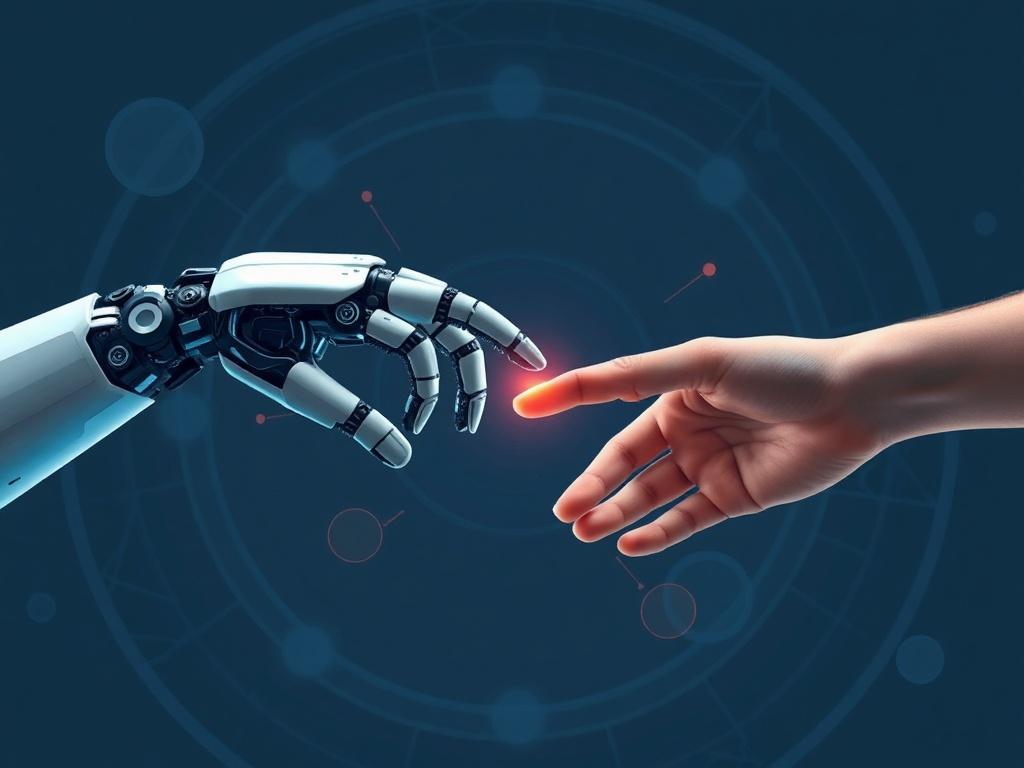
Language remains one of the principal obstacles dividing people in our ever-more connected world. Yet rapid progress in Natural Language Processing (NLP), driven by Artificial Intelligence (AI), is transforming our capacity to overcome these linguistic divides. In this piece, we will examine the intriguing domain of NLP and how it is changing communication, access to information, and global problem-solving.
Understanding Natural Language Processing
The Essence of NLP
Natural Language Processing, abbreviated NLP, is an AI discipline concerned with how computers and human language interact. Its goal is to allow machines to comprehend, interpret, and produce human language in ways that are meaningful and sensitive to context. NLP systems are built to handle and examine huge amounts of written or spoken data, making them powerful for extracting knowledge from unstructured sources.
Components of NLP
NLP covers a variety of functions and elements, such as:
- Text Analysis: NLP inspects extensive collections of text to pull out facts, detect sentiment, and recognize entities (for example names, dates, and places).
- Speech Recognition: It allows machines to transform spoken words into written form, enabling voice control and transcription services.
- Machine Translation: Tools based on NLP can rapidly convert text between languages, helping to dismantle linguistic boundaries.
Breaking Language Barriers
Multilingual Communication
A clear effect of NLP is its support for multilingual interaction. Translation platforms like Google Translate and deep-learning models built on Transformer architectures have simplified communication across different languages. These systems manage intricate grammatical structures and subtleties, producing translations that feel more precise and natural.
Language Learning and Accessibility
Language-learning apps powered by NLP have made learning languages more accessible. They employ AI to tailor lessons to each learner’s level and supply instant feedback. Moreover, NLP solutions have enhanced accessibility for people with disabilities through reliable text-to-speech and speech-to-text features.
Beyond Translation: Practical Applications
Healthcare
In healthcare, NLP has enabled the examination of electronic health records, clinical notes, and medical research. It can spot patterns, surface important findings, and aid in disease identification. NLP-driven chatbots also act as virtual health aides, responding to questions and offering medical information.
Customer Support
NLP-based chatbots and virtual assistants are improving customer service. They deliver prompt replies to queries, handle routine problems, and suggest tailored solutions, boosting customer satisfaction and operational productivity.
Information Retrieval
Search engines employ NLP to return more pertinent results. These models grasp the context behind user queries and yield more accurate responses, making it easier and quicker to retrieve information.
Sentiment Analysis
The capacity of NLP to assess sentiment in text is extremely useful for businesses. It helps firms understand customer attitudes from reviews and social media, informing decisions, refining products, and elevating customer interactions.
Challenges and Ethical Considerations
Bias and Fairness
NLP systems can mirror biases found in their training datasets, producing prejudiced results or perpetuating stereotypes. Tackling bias and ensuring equitable behavior in NLP models is a major concern.
Privacy and Security
The large volumes of textual data processed by NLP raise questions about privacy and security. Safeguarding sensitive data and maintaining secure handling practices are crucial issues to address.
The Future of NLP
Continuous Advancements
NLP is advancing quickly. New, more capable models like GPT-3 and BERT keep extending the limits of AI in understanding and generating language.
Conversational AI
Conversational AI, fueled by NLP, is set to play an even larger role in everyday life. Virtual assistants such as Siri and Alexa, along with chatbots, will keep improving to enable more natural, context-sensitive conversations.
Conclusion
Natural Language Processing does more than overcome linguistic differences; it dismantles communication obstacles and promotes global cooperation. Through AI-driven NLP, we are entering an age of broader linguistic access where language ceases to be an unbeatable barrier.
As NLP evolves, it is important to confront issues of bias, privacy, and security while embracing its enormous promise. NLP is more than a tool—it opens the door to a more connected, inclusive world where language serves as a bridge rather than a divide.
